
From Hustle to Homeownership
Every morning before sunrise, Uganda’s cities begin to hum. Engines start. Market stalls open. Phones light up with ride requests. The informal sector which includes boda boda riders, vendors, traders, young entrepreneurs powers the nation forward.
At the heart of this movement is the United BodaBoda Riders Cooperative Union (Union), a national cooperative born to unify and professionalize Uganda’s highly fragmented motorcycle taxis “boda- bodas” sector which has since expanded to include the wider informal sector (matatu taxis, bus operators, traders and vendors).
In just a short time, Union has grown into a platform of practical solutions by supporting and empowering its members particularly through digital innovation, financial inclusion, and sustainable mobility solutions; from mobility apps and asset financing to affordable consumer products. Its promise is simple but bold: #TheBetterWay.
But beyond championing Uganda’s EV revolution, Union has set its sights on something even bigger.
Homeownership.
Uganda’s Housing Crisis
Uganda faces a staggering housing deficit of approximately 2.3 million units . And the burden falls hardest on low- income earners — especially those in the informal sector.
For many Ugandans at the grassroots, some of whom are Union members, home ownership feels like a distant dream. Traditional mortgages demand formal payslips, high equity deposits, and rigid qualification structures make it impossible for them to invest in
that dream.
In a sector where people earn daily to survive daily, they rely heavily on loans frombanksormicrofinancierstokeeptheir businesses running. But without land or a house, most of them are unable to start or stay in business since land and houses are widely recognized as collateral, which they lack. Union decided to bridge the gap between low accommodation and low income earners.
Introducing Union Villages
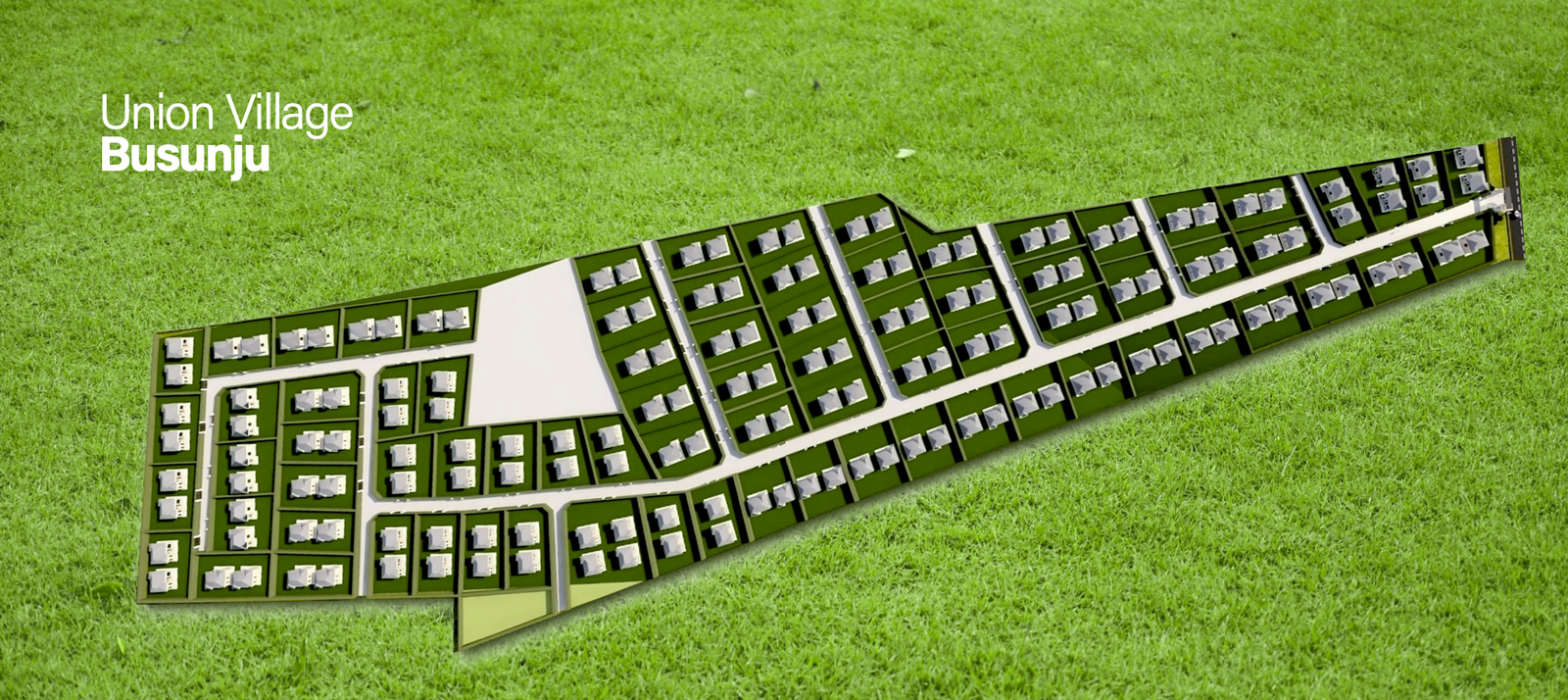
The Union Villages & Housing Development Initiative is an ambitious, five-year plan to establish structured housing estates nationwide.
Although the initiative kicked off by leasing plots of land in Busunju (55km from Kampala) to its members in 2025, this is not just another estate project. It is a reimagining of how home ownership can work for informal earners.
Each Union Village will feature permanent 2-bedroom homes — thoughtfully designed with: 2 bedrooms, sitting room, kitchen, bathroom & toilet and organized layouts with roads and utilities. These are not makeshift structures. They are permanent, planned communities built with dignity in mind.
A Model That Understands the Hustle
The brilliance of Union Villages lies in its Incremental Deposit-to-Ownership Model. Instead of impossible lump sums, members enter through a phased structure:
Initial deposit
Six-month structured deposit completion House handover
Manageable monthly installments: Three flexible tiers — 3, 5, or 8 years — allow different income levels to participate
For a boda rider who has never qualified for a bank mortgage, this model speaks their language. It mirrors how they already operate. It turns the daily hustle into a pathway to ownership.
Beyond a House: Building Security
Union Villages are more than walls and roofing sheets. They represent freedom from lifetime rent, a transferable family asset, collateral for future business growth and family stability. Imagine a rider who has spent 10 years renting a single room in a crowded suburb. Now picture him walking into a structured estate, keys in hand, knowing the land and house are building his net worth month by month.
That shift from tenant to owner is a dream come true.
District by District, Dream by Dream Union’s five-year expansion plan aims to roll out at least one Union Village in all 135 districts in Uganda. This decentralized approach reduces urban congestion, promotes rural asset development, and spreads opportunity geographically. It also signals something powerful: development doesn’t have to be confined to elite suburbs. It can start with the informal sector and scale nationally.
The Better Way to Live
With Union Villages, Union is addressing one of Uganda’s deepest structural challenges: housing poverty. Union Villages is not just a housing project. It is structured inclusion. In the story of Uganda’s informal sector, the narrative has long been survival.
Union is rewriting that story into one of progression.
From earning daily to owning land. From renting rooms to raising families in planned communities. From surviving to building generational wealth. And for thousands of Union members, it may be the first time that home ownership feels not like a fantasy but like a plan.
That is the better way